


How long you should wear a prosthetic leg each day depends on a couple of factors. These are some of the important ones we can think of right now:
- You are using a new device.
- How well your residual limb has healed
- How your skin responds to the socket
If you are someone who has just received the prosthesis, you’ll probably need a different wear schedule from someone who is now used to wearing prosthetic legs for years.
Your prosthetist will give you a schedule for increasing wear time. All you have to do is follow that plan rather than keeping yourself fixed at a certain number. Wearing the device for longer will not make sense if the socket is putting too much pressure on your skin or you are finding it uncomfortable to walk properly.
For people researching lower limb prosthetics, the practical question is how to build up daily use without causing skin problems or ignoring changes in fit.
Key Takeaways
- Follow your prescribed wear schedule: How long you should wear a prosthetic leg depends on your healing, skin condition, socket fit, and activity level. Increase wear time as advised by your prosthetist.
- Check your skin regularly: Persistent redness, pain, pressure points, blisters, or open sores may indicate a problem. Contact your prosthetist or healthcare provider if these occur.
- Maintain a daily care routine: Keep your residual limb and liner clean and dry, use prosthetic socks as instructed, and attend scheduled fitting appointments.
- Remove your prosthesis for bathing and sleeping unless advised otherwise: Standard prosthetic legs are generally not designed for water exposure, and most users should remove them before bed. Follow your care team’s instructions for your specific device.
How Many Hours a Day Should You Wear a Prosthetic Leg?
Different prosthesis users will have different wear times, so comparison is not something I will do here. The hours will depend on your recovery stage, residual limb’s condition, socket fit, activity level, and the advice of your prosthetic care team.
Did you get your prosthetic leg recently? My suggestion is to have a direct conversation with your prosthetist. They can ask you to wear the device for short periods, remove it to see if your skin is fine, and gradually increase the time once your limb gets used to it.
For those using it for a long time, the wear time is definitely going to be different. They can wear their prostheses for a good 10-12 hours (approx., can vary), with breaks when needed. You can check some real life examples here. However, that does not mean everyone should aim for the same number of hours.
You can check this review on PubMed. It examined prosthesis use across 29 studies involving 4,814 people with lower-limb loss. The average reported use was 9.6 hours per day and 6.4 days per week.
That figure describes the people included in the research, and it is definitely not a recommended target for a new prosthesis user or someone who is dealing with skin irritation and pain.
Additionally, your daily routine is important as well. Someone who uses a prosthesis for household activities will have different needs from someone who spends several hours walking or standing at work. Your wear schedule is always supposed to account for those demands.
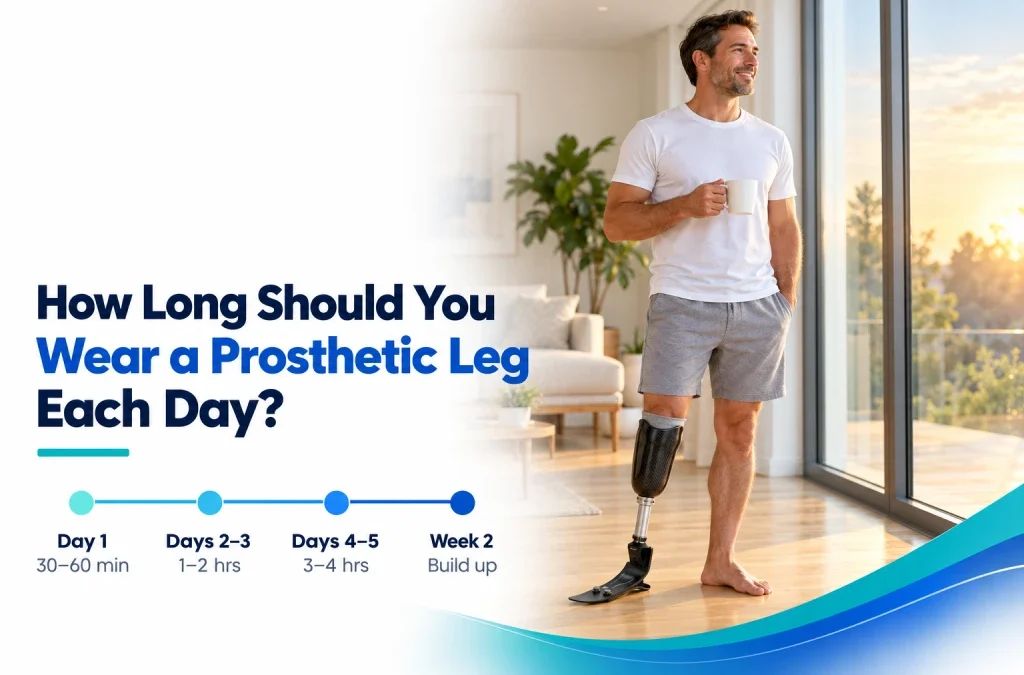
A Rough Schedule (Approx Figures)
I’ll share an example with you of how wear time can gradually increase as you adjust to a new prosthetic leg. This is suggested as a starting point, and not a fixed schedule. Your prosthetist is the right person to recommend a plan based on your residual limb, skin condition, and how you respond to wearing the device.
| Day | Approximate Wear Time | What to Watch For |
| Day 1 | 30 to 60 minutes total | Redness lasting more than 15 to 20 minutes after removing the prosthesis |
| Days 2 to 3 | 1 to 2 hours, in sessions | Pressure marks in specific areas |
| Days 4 to 5 | 3 to 4 hours, in sessions | Check whether your skin returns to its normal colour between sessions |
| Week 2 | Gradually working toward full-day wear, if advised | Redness that persists, blisters, or changes in residual limb swelling |
| Users who have been using for long time | 8 to 16 hours, depending on individual needs | Continue routine skin checks and watch for changes in socket fit over time |
Important: These times are approximate examples, not a prescribed wear schedule for everyone. Follow your prosthetist’s instructions, and contact them if redness persists, you develop blisters or sores, or the socket becomes painful or fits differently.
How to Build Up Wear Time With a New Prosthetic Leg
You will have to give your residual limb enough time so that it can adjust to the pressure and contact created by the socket. Even when the prosthesis fits well during an appointment, the skin can respond differently after a certain point in time.
Your prosthetist will set your initial schedule and tell you when it is the right time to increase wear time. There is no universal timeline that everyone has to abide by.
During the first few days, you will need several short wearing periods, and there will be a lot of breaks in between. Remove the prosthesis at the times recommended by your care team and check your residual limb before putting it back on.
Once your skin gets completely used to the device, your prosthetist can then advise longer periods of use. Even after that, if you find persistent redness, pain, or a blister, do not increase your wear time for the sake of staying on schedule.
A few points to keep in mind:
- Follow your individual schedule: Do not copy another person’s wear routine. Their healing, socket fit, and skin condition can differ from yours.
- Check your skin after removing the prosthesis: Look for redness, rubbing, blisters, cuts, or areas that feel tender.
- Pay attention to changes during activity: A socket that feels comfortable while you are sitting can feel different after walking or standing.
- Keep your follow-up appointments: Your prosthetist can assess fit and make adjustments as your residual limb changes.
A new prosthesis will need adjustments even when you are following your schedule correctly. It’s better not to assume that every fitting problem will resolve as you get used to the device.
Signs You Need to Take Your Prosthetic Leg Off
Be very attentive to your skin and how the socket feels while you are using it. Watch out for the following signs:
1. Constant Redness
Temporary skin redness often takes place where the socket applies pressure. However, if the redness doesn’t go away after you remove the prosthesis, that’s when you’ll need attention.
Once you remove the device, check your residual limb. You can use a mirror or ask someone to help you check areas that are difficult to see.
The MSD Manual’s guidance on residual-limb skin care explains why pressure-related skin damage calls for attention. A small sore will only worsen if the same area continues to rub against the socket.
2. Pain or pressure in one spot
If you deal with a new pressure point, some pinching sensation, or pain while walking, get it checked as soon as possible. Tolerating the discomfort is not an option; it will only make things tougher for you.
Remove the prosthesis and check if your skin is acting up. If the pain returns whenever you put the device back on, stop using it until you have received advice from your prosthetist or healthcare provider.
Major concerns like sudden or severe pain, spreading redness, warmth, discharge, or signs of infection need prompt medical assessment.
3. Blisters, cuts, or open sores
Blisters and skin breaks are real problems; ignoring them is never an option. Friction, moisture, and pressure can damage your skin that comes into contact with the socket.
It’s better to not wear the prosthesis over an open wound, unless your treating clinician has given you some plan. The first step should include contacting your healthcare provider about wound care and asking your prosthetist to assess the fit. Based on their advice, you can decide when to resume using.
People with reduced sensation or conditions that affect circulation need to be careful, as skin damage can develop without much pain at times.
4. A socket that feels loose or too tight
Your residual limb can change in volume during the day. As a result, a socket that fits comfortably in the morning can feel loose later; even putting it on can feel like a task.
If the prosthesis slips, feels unstable, or creates new pressure, do not try to solve the problem by simply wearing it for fewer hours. The fit itself needs your attention.
Your prosthetist can show you whether adjusting prosthetic sock thickness is appropriate for your device. Adding or removing socks without guidance is going to affect how securely your limb sits inside the socket.
How to Make Daily Prosthesis Use More Comfortable
Below, we have mentioned a couple of tips to make daily prosthesis use more comfortable:
- Keep your residual limb and liner clean: Follow the cleaning instructions given by your prosthetist and the device manufacturer. Also, dry your skin properly before wearing the prosthesis.
- Check the skin every day: Look for redness, blisters, cuts, unusual swelling, or changes around the scar. Even if you don’t feel any pain, consistent skin issues are not something you should ignore.
- Use prosthetic socks as instructed: If your limb changes volume, ask your prosthetist how to manage sock thickness.
- Don’t apply lotion just before fitting the prosthesis: Some creams make the skin slippery and sometimes affect the liner, depending on the products used. Ask your care team which skin products are okay to use and when you can apply them.
- Remove the prosthesis before you sleep (Unless your clinician has given different instructions). Most routine lower-limb prosthetic wear schedules will allow you time without the device. If you need help moving around at night, talk to your care team about safe options.
- Keep up with fitting appointments: Changes in your residual limb can affect the socket, so make sure you are going to those fitting appointments whenever they are scheduled.
Can You Bathe or Shower With a Prosthetic Leg?
Standard prosthetic legs are not meant to get wet, nor are they designed for that purpose. Unless your prosthesis is made for use in water, remove it before bathing. Water can damage certain components, and a wet prosthesis will be slippery anyway.
Does the Same Wear Schedule Apply to All Lower-Limb Prostheses?
No.
There are differences in design and physical demand between a below-knee prosthesis and an above-knee prosthesis. Your strength, balance, healing, socket fit, and walking goals also affect your plan.
People with an amputation at the hip level will have different fitting and mobility needs from people with below-knee or above-knee amputations. Their prosthetic care requires individual assessment.
Here, we would like to make a subtle distinction, as we have mentioned amputation at the hip level above. The term hip prosthetics can also refer to artificial hip joints implanted during hip replacement surgery. Those implants are different from external prosthetic legs. This article is about external lower-limb prostheses, which are fitted and adjusted as part of prosthetic care.
Bottom Line
To end with, we just want you to know that there are no specific hours that you are bound to follow. You can increase the timeline once you get comfortable wearing the prosthetic leg. If you are using the device for the first time, abide by what your prosthetist suggests. If you have used one for years and it starts causing pain, slipping, or skin irritation, opt for a fitting assessment instead of just adapting to the problem.
At ACCESS Prosthetics, patients can discuss prosthetic fitting concerns, changes in socket comfort, and questions about daily prosthesis use with our team. If you are having trouble with your current device or preparing for your first fitting, contact ACCESS Prosthetics to discuss your needs and arrange an in-person consultation.
Frequently Asked Questions
Can I wear my prosthetic leg all day?
Some users wear their prostheses for much of the day, they have gotten habituated to it now. If you have a new prosthesis, follow your prescribed wear schedule and increase the time only as advised. Remove the device to check your skin, and do not continue wearing it through pain or skin damage.
Can you walk normally with a prosthetic leg?
Walking with a prosthesis takes practice. Your walking pattern depends on your amputation level, balance, strength, prosthetic fit, and physical therapy. You may need a walking aid while learning to use the device. Your prosthetist and physical therapist can help you work on safe walking techniques.
Can you wear jeans with a prosthetic leg?
Yes, many people wear jeans with a prosthetic leg. The fit of the trousers depends on the prosthesis, socket shape, and how much room the clothing provides. Choose clothing that does not interfere with putting on the device, checking the socket, or moving comfortably.