


According to data, The U.S. prosthetics and orthotics market was worth USD 1,606.4 million in 2025 and is expected to grow to USD 2,104.1 million by 2033.
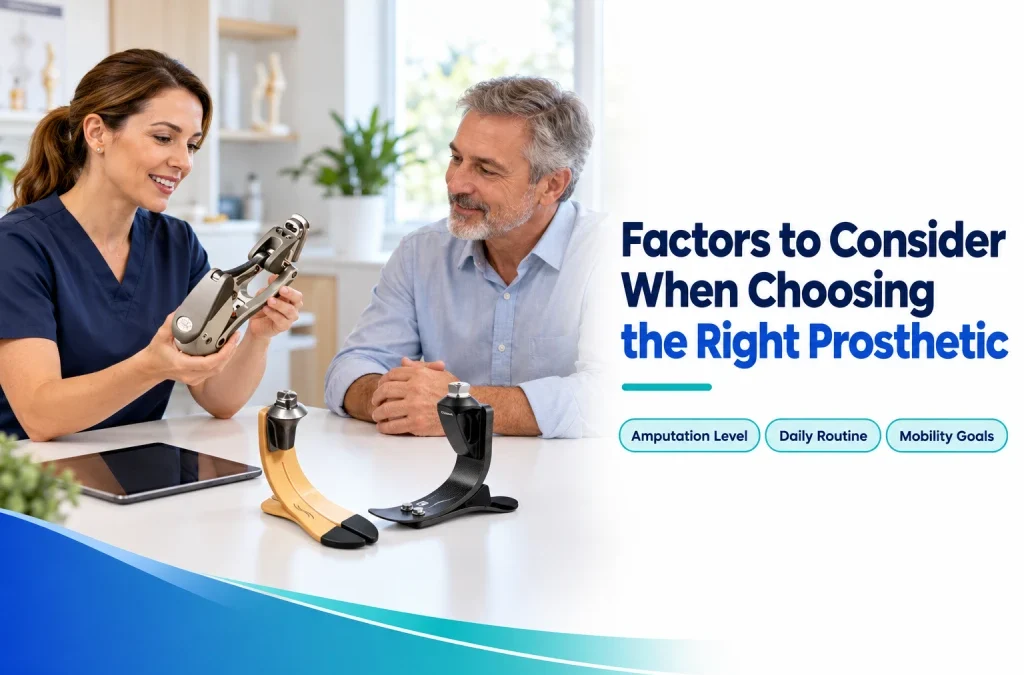
To choose the right prosthetic, you’ll have to understand that the right setup depends on the following factors:
- Your amputation level
- Residual limb
- Strength
- Balance
- Daily routine
- What you want to do with your prosthesis
Your prosthetist needs this information to determine which socket, knee, foot, suspension system, and other components will be best for you.
I’m saying this because a prosthesis that works just fine for one person will probably not suit your needs. Someone who walks indoors will have different requirements from someone who spends hours on their feet, needs to use the stairs every day, or walks across uneven outdoor surfaces.
Additionally, we have seen some of my patients’ needs change after they receive a prosthesis. It can be their residual limb that changes shape or volume. They can gain more strength during rehabilitation, return to work, or get involved in activities that they were not doing before.
So if we were you, we wouldn’t have searched for the “best” prosthesis; We would rather focus on what practically makes sense for me.
Key Takeaways
- Your prosthesis should match your needs, not someone else’s. Amputation level, residual limb, strength, balance, daily routine, mobility goals, and activity level all influence the right setup.
- Socket fit, comfort, and stability matter just as much as the components themselves. Pressure, persistent redness, pain, skin irritation, or instability can indicate that your prosthesis needs to be assessed or adjusted.
- The prosthetic components need to work together. Your socket, knee, foot, suspension system, and alignment all affect how comfortably and safely you move.
- Your prosthetic needs can change over time. Changes in your residual limb, strength, body weight, work, hobbies, or activity level may mean your current socket or components need to be reassessed.
What Should You Consider When Choosing a Prosthetic?
Before we tell you about the factors to consider, we would really like you to see this Reddit thread once. It will change something in you, and definitely help you gain confidence.
Now, let’s get straight to the factors:
1. Your Amputation Level
Your amputation level will affect the type of prosthesis you need. If you have a below-knee amputation, good news: your natural knee will control the leg. However, with an above-knee amputation, the prosthesis needs to include a knee because the natural knee is no longer present.
The amount of limb remaining is another factor affecting how you control the prosthesis and how much effort walking requires.
For this reason, it’s better not to compare your setup too closely with another prosthesis user. Even two people with the same amputation level can have different needs, as their strength, residual limbs, activity levels, and goals are different.
2. Your Daily Activities and Mobility Goals
First, get back to your normal routine. Then, ask yourself the following questions:
- How much walking am I doing each day?
- Do I spend several hours standing?
- Am I using stairs regularly?
- Where do I walk mostly? Outdoors or indoors?
- Do I need to walk on grass, gravel, slopes, or other uneven surfaces?
- Do I exercise or participate in recreational activities?
- Am I planning to return to a physically demanding job?
These answers will give your prosthetist a better idea of what your prosthesis needs to take care of. Your goal does not have to be running a marathon here. It can be something as simple as cooking dinner while standing, going grocery shopping sometimes, returning to work, or taking a walk around your neighborhood without worrying about your prosthesis.
Tell your prosthetist about those goals. They are useful when deciding what type of setup will suit you just fine.
3. Socket Fit and Comfort
The socket will connect your residual limb to the rest of the prosthesis. Since your limb will be inside it, chances are high the fit will affect both comfort and control.
Watch for signs that the fit has changed:
- Pressure in one particular area
- Your limb moving around inside the socket.
- Difficulty putting the prosthesis on or taking it off
- Discomfort that increases during the day
- Changes in skin condition after wearing the prosthesis
As we have mentioned above, your residual limb can change in size and shape. It can happen because of swelling, activity, changes in body weight, muscle changes, or normal changes throughout the day. That means a socket that fitted well initially may need an adjustment later.
There are also different approaches to socket design. A Martin Bionics Socket, for example, can be adjusted and is designed around changes in residual-limb volume. Whether it is appropriate for you is something that you will have to discuss with your prosthetist.
Having the tightest possible socket isn’t the goal here. It should provide the support and control you need without creating unnecessary pressure.
4. Stability and Control
If you have an above-knee amputation, the prosthetic knee is an important part of how you stand and walk.
Your prosthetist will probably look at:
- How steady you are when standing
- How you initiate and control each step
- How you manage using stairs
- How you handle changes in walking speed
- Whether uneven surfaces affect your stability
Different prosthetic knees provide different types of support and movement control. The right choice is completely based on how you use your prosthesis.
If you search for prosthetic knees on Google, you will come across manufacturers like Ottobock and Össur. However, the manufacturer alone does not tell you whether a particular component is right for you. It needs to work with your abilities and the rest of your prosthetic system.
What About the 3R80 Knee?
The 3R80 knee is an OttoBock mechanical knee that can be considered for some prosthesis users.
In case you come across a specific knee while researching online, you can always bring it up at your appointment. Your prosthetist will then determine if that specific knee is a suitable option for you or not.
The decision will include these factors:
- Your walking ability
- Strength and balance
- Activity level
- Body weight
- Amputation level
- The other components in your prosthesis
A product description will never account for all of these factors.
5. The Surfaces You Walk On
Your usual walking environment is an important consideration here.
Walking across a smooth floor is definitely going to be way different from walking on a lawn. A flat sidewalk is again different from a sloped driveway or uneven trail.
In a week, what places do you mostly visit? Some of the common places that we can think of include:
- Home and other indoor spaces
- Workplaces
- Sidewalks and parking lots
- Grass and uneven ground
- Stairs
- Slopes or ramps
- Outdoor recreational areas
If one of these surfaces regularly makes life a little more difficult for you, tell your prosthetist. It will provide useful information when assessing your current setup.
Also mention changes to your routine (if any). If you take a more active job or start spending more time outdoors, your prosthetic needs will differ from what they were when your current setup was prescribed.
6. Your Strength and Balance
Using a prosthesis requires control from your residual limb and beyond it. Your prosthetist will consider:
- Residual-limb strength
- Strength in your other leg
- Core and hip strength
- Balance
- Your ability to recover from a change in footing
- How easily you can stand, turn, sit, and climb stairs
Changes in body weight can also affect socket fit and how the prosthesis feels. This definitely does not mean you need to train yourself in terms of fitness before using a prosthesis. It gives your prosthetist a clearer picture of how your body handles the current option.
If your strength or balance changes, make sure you mention it during an appointment. The same applies if your activity level increases or decreases significantly.
7. Alignment and How the Components Work Together
The parts of your prosthesis will have to work together. Alignment refers to how the socket, knee, foot, and other components are positioned in relation to one another. If something changes, you will notice it when standing or walking.
I’ve mentioned some of the possible signs below:
- Your walking pattern can feel different
- One side feels like it is doing most of the work.
- You feel more pressure in part of the socket.
- You feel less stable.
- Walking takes more effort than it used to
If you notice any one of these changes, have your prosthetist assess the prosthesis once again.
Please do not change components yourself because another person recommended them or because a particular prosthetic worked for someone online. Your body and prosthetic system can respond differently, so let your prosthetist decide for you.
8. Comfort and Skin Health
Comfort is important here as you can wear your prosthesis for several hours a day. Pay attention to your residual limb after removing the prosthesis. You can see some temporary marks occurring from contact with the socket or liner. If you face ongoing problems, know that they deserve attention.
Speak with your prosthetist if you notice:
- Persistent redness
- Repeated blisters
- Pain
- Skin irritation
- Open areas or wounds
- A problem that appears in the same place repeatedly
Please don’t wait until the prosthesis becomes impossible to wear, as asking for help after that won’t help you much. A fit problem is easier to address when you talk about it with your prosthetist while there’s still time.
9. Maintenance and How You Use the Prosthesis
Different components have different care requirements. Feel free to ask your prosthetist:
- How should I clean the socket and liner?
- Which parts need regular inspection?
- What signs of wear should I look for?
- How often should the prosthesis be checked?
Your prosthesis also experiences different levels of wear depending on how you use it. Someone who walks several miles every day puts different demands on their components than someone who takes shorter walks.
If your activity level changes, tell your prosthetist. It’s better to check whether your current prosthesis still fits your routine.
10. Your Prosthesis May Need to Change Over Time
You may not have the same prosthetic needs a year from now that you have today.
Some of the changes can include:
- Your residual limb changes in shape or volume.
- Improved strength after rehabilitation
- A change in body weight
- Returning to work
- Becoming more physically active
- Starting a new hobby
- Spending more time walking outdoors
For example, initially a step that supports basic mobility after amputation can work for you. Later, you can return to a job that keeps you on your feet all day long. Your prosthetist can reassess whether your current socket and components still suit that routine.
The same applies if a prosthesis that has worked well for years suddenly feels uncomfortable or unstable. Your body or routine can change, and that means your prosthesis will have to be assessed.
Questions to Ask Your Prosthetist
You do not need to know every prosthetic component by name before your appointment. You can ask:
- Why are you recommending this socket, knee, or foot?
- What is this setup intended to help me do?
- How will this component work with the rest of my prosthesis?
- Are there activities I should avoid?
- How should I maintain the components?
- What changes should I tell you about?
- What should I do if my residual limb changes size or shape?
- When should I come back for an adjustment?
Apart from that, also describe the problems you are already facing at this point.
You can face issues where your socket becomes uncomfortable later in the day. Maybe your knee feels less stable on stairs. You can start walking outdoors more often, and uneven ground has become difficult. A lot of things can change; that’s the whole point here.
Specific examples are much more useful than simply saying that your prosthesis does not feel right.
Is the Most Advanced Prosthesis Always the Best Choice?
No. A component with more features doesn’t mean it’s a better choice. If the prosthesis makes your life easier to some extent, that counts for sure.
The same applies to manufacturers. Össur, OttoBock, Martin Bionics, and other companies make different prosthetic components. A familiar brand name does not tell you whether a specific component will work well for you.
Bottom Line
Choosing a prosthesis is about finding a solution that works well for your body and your daily life.
Your amputation level, socket fit, strength, balance, walking environment, comfort, activity level, and mobility goals- everything counts here. The components also need to work together, and your prosthesis will require adjustments as your body or routine changes.
If your prosthesis causes ongoing discomfort, feels unstable, or no longer works the way it used to, speak with your prosthetist. It’s always better to check if there’s any change in fit or function rather than working around it.
If you need help evaluating your prosthetic options or current setup, we at ACCESS Prosthetics provide in-person prosthetic evaluation, fitting, adjustment, and follow-up care.
FAQs:
How do I know which prosthesis is right for me?
There is no single option that works for everyone. Your prosthetist will consider your amputation level, residual limb, strength, balance, activity level, daily routine, and mobility goals when choosing the components for your prosthesis.
Should I choose a prosthesis based on the brand?
Not necessarily. Brands such as Össur and OttoBock make a range of prosthetic components, but the brand name alone does not determine whether a component is suitable. What matters is how the component fits your needs and works with the rest of your prosthesis.
What should I do if my prosthesis no longer feels comfortable?
Contact your prosthetist and describe what has changed. Your residual limb may have changed in size or shape, or the socket, alignment, or another component may need to be assessed. Do not assume that ongoing pain, skin irritation, or instability is something you simply have to live with.