You should consult your physician or health care professional before starting any fitness program to determine if it is right for your needs. This is particularly true if you (or your family) have a history of high blood pressure or heart disease, or if you have ever experienced chest pain when exercising or in the past month when not engaged in physical activity. Also be sure to consult your physician or health care professional if you smoke, have high cholesterol, are obese, or have a bone or joint problem that could be made worse by a change in physical activity.
Do not start any fitness program if your physician or health care provider advises against it.
If you experience faintness, dizziness, pain or shortness of breath at any time while exercising you should stop immediately.
If you have any concerns or questions about your health, you should always consult with a physician or other health care professional.
The days of the “No pain, no gain!” approach to exercise are over. These physical fitness experts are developing fun and do-able at home workouts for people recovering from a lower limb injury, amputation, living with a disability, sitting in wheelchair, or just sitting at their desks at home! Exercise does not need to cause unnecessary pain or harm to be beneficial. According to the CDC:
Significant health benefitscan be obtained with a moderate amount of physical activity, preferably daily. The same moderate amount of activity can be obtained in longer sessions of moderately intense activities (such as 30-40 minutes of wheeling oneself in a wheelchair) or in shorter sessions of more strenuous activities (such as 20 minutes of wheelchair basketball).
Additional health benefits can be gained through greater amounts of physical activity. People who can maintain a regular routine of physical activity that is of longer duration or of greater intensity are likely to derive greater benefit.
Benefits of Physical Activity
Reduces the risk of dying from coronary heart disease and of developing high blood pressure, colon cancer, and diabetes.
Can help people with chronic, disabling conditions improve their stamina and muscle strength.
Reduces symptoms of anxiety and depression, improves mood, and promotes general feelings of well-being.
Helps control joint swelling and pain associated with arthritis.
Can help reduce blood pressure in some people with hypertension.
As with any workout, start small (5-10 minutes) and build up as you become more accustomed to the moves. Remember to be kind to yourself, and congratulate yourself for making positive steps to maintain your health. The more regularly you exercise, the greater the health benefits.
1. 30 Minute Seated Cardio Boxing Workout for Disabled, Injured, Paraplegic or Amputee
This is a “Cardio Kickboxing” workout (the “kick” is for kicking ass). You don’t need equipment or even full mobility to do this workout. Just a place to sit and the desire to move.
2. Seated Exercise for Obesity and Limited Mobility
If you are chair ridden and need a very low starting point then this workout is for you!
3.Fuzion Fitness with Alexis #31: Chair Workout – November 2015
Whether you want to sneak in some extra exercise at the office from your desk chair or are dealing with an injury or limitation that requires you to remain seated, this routine can offer some seated alternatives to your favorite body weight exercises.
4. Lisa Ericson’s Seated Aerobic Workout
This amazingly 80’s workout video provides high intensity aerobic exercise for anyone, regardless of fitness level or disability, without the use of the legs.
5. Chair Yoga – Gentle Yoga For People With Disabilities
This seated yoga video is for people suffering from recent knee surgeries/injuries, and/or people with disabilities. This 30 minute yoga flow takes all pressure off and knees and allows us to meet our bodies exactly where we’re at, whether that be in crutches, because you have to be seated for long periods of time, or after having knee surgery or knee injuries.
6. Bonus! 20 Min Chair Exercises Sitting Down Workout – Seated Exercise for Seniors, Elderly, & EVERYONE ELSE
Do you have a favorite workout video or exercise? What activities have helped you stay active and motivated to move? Let us know in the comments.
Limb loss is much more common than many people realize, and the numbers are growing. By learning the facts about limb loss, we can start to be better advocates for our friends and family, feel less alone during our journey with limb loss, and raise awareness through meaningful, fact-based discussion.
1. There are 2.1 millionpeople living with limb loss in the USA, and that number is expected to double by 2050.
2. 185,000people have a amputation each year. This means that 300 to 500 amputations are performed every day.
3. 1,558 military personnel lost a limb as a result of the wars in Afghanistan and Iraq.
4. Around 30%of people with limb loss experience depression and/or anxiety.
5. 85%of lower limb amputations are proceeded by a foot ulcer.
6. Lifetime healthcare costs for people with limb loss is $509,275 compared to $361,200 for people without limb loss.
7. African Americans are 4 times more likely to have an amputation than White Americans.
8. Hospital charges for patients who underwent an amputation totaled $8.7 billion in 2013.
9. Of persons with diabetes who have a lower extremity amputation, up to 55% will require amputation of the second leg within 2‐3 years
10. Nearly half of the individuals who have an amputation due to vascular disease will die within 5 years. This is higher than the five year mortality rates for breast cancer, colon cancer, and prostate cancer.
11. The number of amputations caused by diabetes increased by 24% from 1988 to 2009.
12. Below-knee amputations are the most common amputations, representing 71% of dysvascular amputations1; there is a 47% expected increase in below knee amputations from 1995-2020.
13. The estimated cost to American private & public insurance agencies is $12 billion annually.
14. There are more than 1 million annual limb amputations globally -—one every 30 seconds.
15. The International Diabetes Federation (IDF) predicts that current global prevalence of diabetes will burgeon from 285 million to reach 435 million by 2030.
You will have a prosthesis for the rest of your life. That is why it is critically important to know you have the right practitioner who will be able to meet your individual needs for a long time to come.
At Access Prosthetics, we are a good resource for amputees seeking advice and new care options. However, we encourage you to research all medical providers. Should you be uncertain or uncomfortable with a treatment plan, consider securing a second or even a third opinion.
The following is a guide to help you choose the right provider to best serve your unique situation:
Your Practitioner Credentialed?
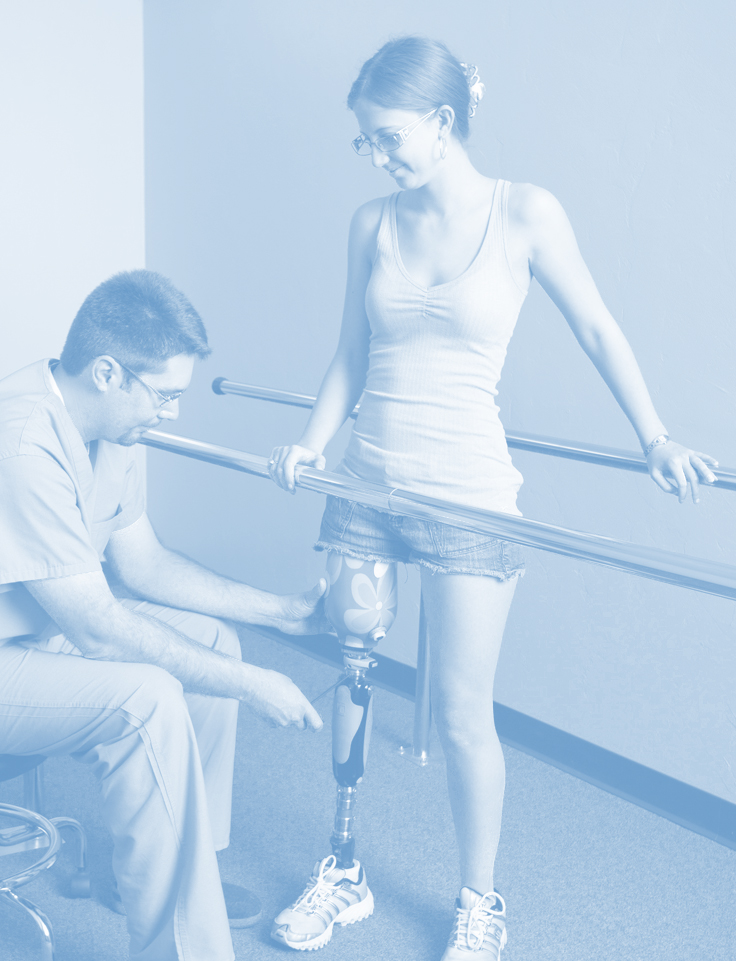
Ask about certifications and look for ABC- and BOC-certified providers as these certifications ensure the highest standards of education, training, and professionalism. It is important to find out if you are seeking the help of a certified prosthetist or orthotist who have the acronyms C.Ped, CO, CP or CPO associated with their names.
Make Sure Your Prosthetist has a Strong Track Record
Every profession has good and bad practitioners. Most patients never seek reviews of providers or ask for references. This is a critical step in securing the right provider. The right experience and approach can make all the difference in the world, especially when fitting prosthesis that are meant to last for many years.
Find a Respectful Communicator
Regardless of the type of practitioner you need, you’ll want to be sure you can communicate effectively in an atmosphere of mutual respect. Many patients complain that they can’t understand “medical speak” or they don’t feel providers listen to them, or give them enough time. If this is the case, it may be time to find another provider.
Find a Prosthetist Who Will Give You Options
There is no such thing as a one-size-fits-all solution, or a singular solution. A good prosthetist will give you options based on assessing a wide range of variables that affect how you live and what you expect from a prosthesis. It is also important to find a provider who will spend as much time assessing your individual needs as he or she spends offering solutions. If you are being given only one solution, seek another opinion to ensure you get the best option for your life.
Consider your Practitioner’s location
You will be making many trips to your prosthetist, especially in the early stages of fitting and adjusting your prosthesis for long-term use. A practice that is easy to find and can be driven to easily is important. It is also important to find a local provider who is vested in the community. That way, you are assured a relationship with a provider that will be there for the long run.





 12. Below-knee amputations are the most common amputations, representing 71% of dysvascular amputations1; there is a 47% expected increase in below knee amputations from 1995-2020.
 Your Practitioner Credentialed?