


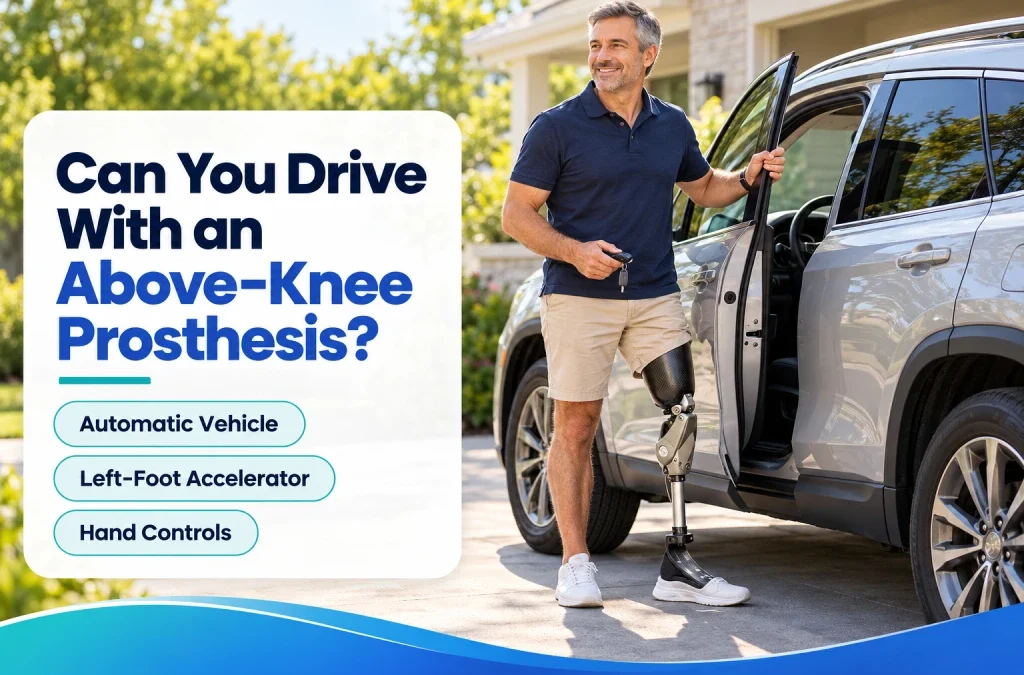
Yes, absolutely. If you have been amputated above the knee, it does not mean you have to give up driving. You know what makes the real difference? It’s how you control the car. With an above-knee amputation, the only difference will be that you’ll no longer have your natural knee to help with pedal control.
Your setup also depends on which leg was amputated.
- Right above-knee amputation: The right leg controls the accelerator and brake, so you may need an alternative way to operate them.
- Left above-knee amputation: An automatic vehicle will be way easier to manage because your right leg can still operate the accelerator and brake.
- Bilateral above-knee amputation: You will probably need hand controls or other vehicle modifications.
Well, there is no one solution that’s going to suit everyone. Your amputation level, which leg is affected, your strength and range of motion, your prosthesis, the vehicle you drive- everything will matter.
Key Takeaways:
- Driving after an above-knee amputation is possible. Your ability to drive depends on your physical abilities, prosthesis, and ability to control the vehicle safely.
- Your vehicle setup is important here. A left-foot accelerator or hand controls will be helpful, particularly after a right above-knee amputation. An automatic vehicle is a great option for some drivers with a left above-knee amputation.
- Go through an assessment test before returning to the road. A driving assessment can help determine whether you need adaptive equipment and whether you can operate the vehicle safely.
- Tell your prosthetist that driving is important to you. Socket fit, residual limb discomfort, and changes in limb volume can make you feel uncomfortable while driving. Raise these concerns during your prosthetic appointments.
Driving with a Right Above-Knee Prosthesis
A right above-knee amputation requires more planning and plotting, since your right leg handles both the gas and brake pedals.
- One good option that we can suggest is a left-foot accelerator. This adds an accelerator pedal on the left side of the brake pedal. You can then use your left foot for both acceleration and braking.
- Another option will be hand controls, which move acceleration and braking functions to your hand-operated controls. You can read this Reddit thread and check this person’s post recommending hand controls as a best course of action for right leg amputees.
Are these options the right choice? That’s something you’ll have to get comfortable with after going through the process of above the knee prosthetics. You need to be able to use the controls without hesitation and respond to traffic safely.
One thing you should NOT do is try to use the prosthetic right foot for the accelerator while using your left foot for the brake.
Driving with a Left Above-knee Prosthesis
A left above-knee amputation will be comparatively simpler when you drive an automatic vehicle. The best part? Your right leg can still operate the accelerator and brake.
But wait, it does not mean you can simply get into the car and start driving right after your prosthesis. You still need enough strength, control, and range of motion to operate the vehicle and drive safely.
On the other hand, a manual transmission is going to be different. You will have to use your left foot to press the clutch, so an above-knee amputation on that side can make a manual vehicle harder to drive. For many people, an automatic vehicle removes that particular problem.
When Can You Start Driving After an Above-Knee Amputation?
After the process of above knee amputee prosthetics, it might take weeks or months to get back to driving. Before you return to driving, there has to be a proper recovery process to control the vehicle safely. That includes more than being able to walk with your prosthesis.
I’ve listed the following areas where you will have to work on:
- Strength in your residual limb and other leg
- Hip and knee control
- Balance
- Range of motion
- Getting in and out of the vehicle
- Sitting comfortably for the long drive
- Controlling your prosthesis
- Managing any pain or skin problems
If your residual limb is sore or your socket is getting exposed to rubbing, pinching, or shifting, a long drive won’t be something you are going to enjoy. That is a concern that you must bring up with your prosthetist rather than trying to put up with it.
Do You Need a Driving Assessment?
Yes, a driving assessment will help if you are returning to driving after an amputation or need adaptive equipment.
In this assessment, a driver rehabilitation specialist will look at how you handle the driving tasks. That can include braking, acceleration, steering, reaction time, getting in and out of the car, and using any adaptive equipment. You can start driving your vehicle in a less congested area before moving into regular traffic.
You need to feel confident enough that you can operate the vehicle consistently and react when something unexpected happens. That might take some time, but once you’re back at it, there’s no looking back either.
Your physician, physical therapist, or prosthetist can help determine when an assessment makes sense for your given condition.
How Can Your Prosthesis Affect Driving?
Your prosthesis does not have to be uncomfortable just because you are willing to get back to drive. A socket that doesn’t fit properly can lead to pressure, rubbing, or movement of the residual limb. Additionally, you may also notice changes in fit as your residual limb volume changes during the day. Now that matters when you are driving.
It’s very important that you sit comfortably and keep your attention right on the road. If you notice that your prosthesis is moving more than usual, your socket feels too tight or too loose, or you develop a painful pressure spot, let your prosthetist know without any delay.
What Should You Practice Before Driving on Your Own?
Once you have been cleared to return to driving and have the appropriate setup, start somewhere less crowded and quiet. An empty parking lot can give you room to get used to the controls without facing any traffic at all.
Practice the following tasks once:
- Starting and stopping
- Braking smoothly
- Turning
- Reversing
- Parking
- Using the accelerator
- Emergency braking
- Getting in and out of the vehicle
If you are using a left-foot accelerator or hand controls, spend time with the equipment to get familiar before driving in heavier traffic. It’s never about how quickly you can get back on the road. The controls should feel predictable before you deal with traffic, intersections, and unexpected situations.
What About Long Drives?
There’s a big difference between a short drive and a three-hour drive. Your residual limb will start feeling uncomfortable after sitting for a long time. Your socket will probably feel different later in the day. You can also become tired from holding your body in one position or using a new driving technique.
If you are getting used to driving again, shorter trips are a better option (at least to start with). Go for a drive and pay attention to how your residual limb and prosthesis feel afterward. If you regularly develop pain, pressure, or skin irritation while driving, know that it’s time to talk with your prosthetist. You may need to have your socket or prosthesis checked.
Do You Need a Special License or Vehicle Modifications?
This depends on where you live and what equipment you use. State requirements are different, so check with your state’s motor vehicle agency before returning to driving. Some drivers will require an assessment or road test, particularly when adaptive equipment is involved.
What Should You Discuss with Your Prosthetist?
Tell your prosthetist that you really, REALLY love to drive.
That information is of much use when you are discussing your prosthesis. The reason? Your everyday activities matter when your prosthesis is being fitted and adjusted. If you are not able to sit comfortably, reach the pedals, control the prosthesis, or deal with socket discomfort, your prosthetist needs to know.
You can also ask these additional questions:
- Does my socket fit well enough for longer periods of sitting?
- Are there any issues with my current prosthesis that could affect driving?
- Should I have a driving evaluation?
- Would a different vehicle setup make sense for me right now?
- What should I do if my residual limb becomes painful while driving?
There is no reason to wait until you are already struggling behind the wheel to bring these questions up.
Bottom Line
We will recommend a standard automatic vehicle after you get the hydraulic above-knee prosthesis. It’s best for ease and safety, or else you may need additional equipment such as a left-foot accelerator or hand controls. The answer depends on your amputation, your physical abilities, your prosthesis, and the vehicle.
If driving is important to you, bring it up during your prosthetic care. The earlier your care team knows that getting back behind the wheel is one of your goals, the easier it is to include that goal when discussing your prosthesis, fit, and comfort.
If you have a prescription or you want to ask questions about your prosthetic needs, ACCESS Prosthetics can help you understand the next steps and discuss the options that align well with your prescription.
FAQs
Can I drive with a right above-knee amputation?
Yes, some people with a right above-knee amputation return to driving. Because the right leg normally controls the gas and brake, you may need a left-foot accelerator or hand controls. A driving assessment can help determine which setup you can use safely.
Can I drive an automatic car with an above-knee prosthesis?
An automatic vehicle may be easier to operate for some people, particularly after a left-leg amputation, because the right leg can operate the accelerator and brake. Your ability to drive still depends on your physical abilities and how well you can control the vehicle.
Should I tell my prosthetist that I want to drive?
Yes. Let your prosthetist know if returning to driving is one of your goals. They can discuss your socket fit, comfort, prosthetic function, and whether a driving assessment may be useful.